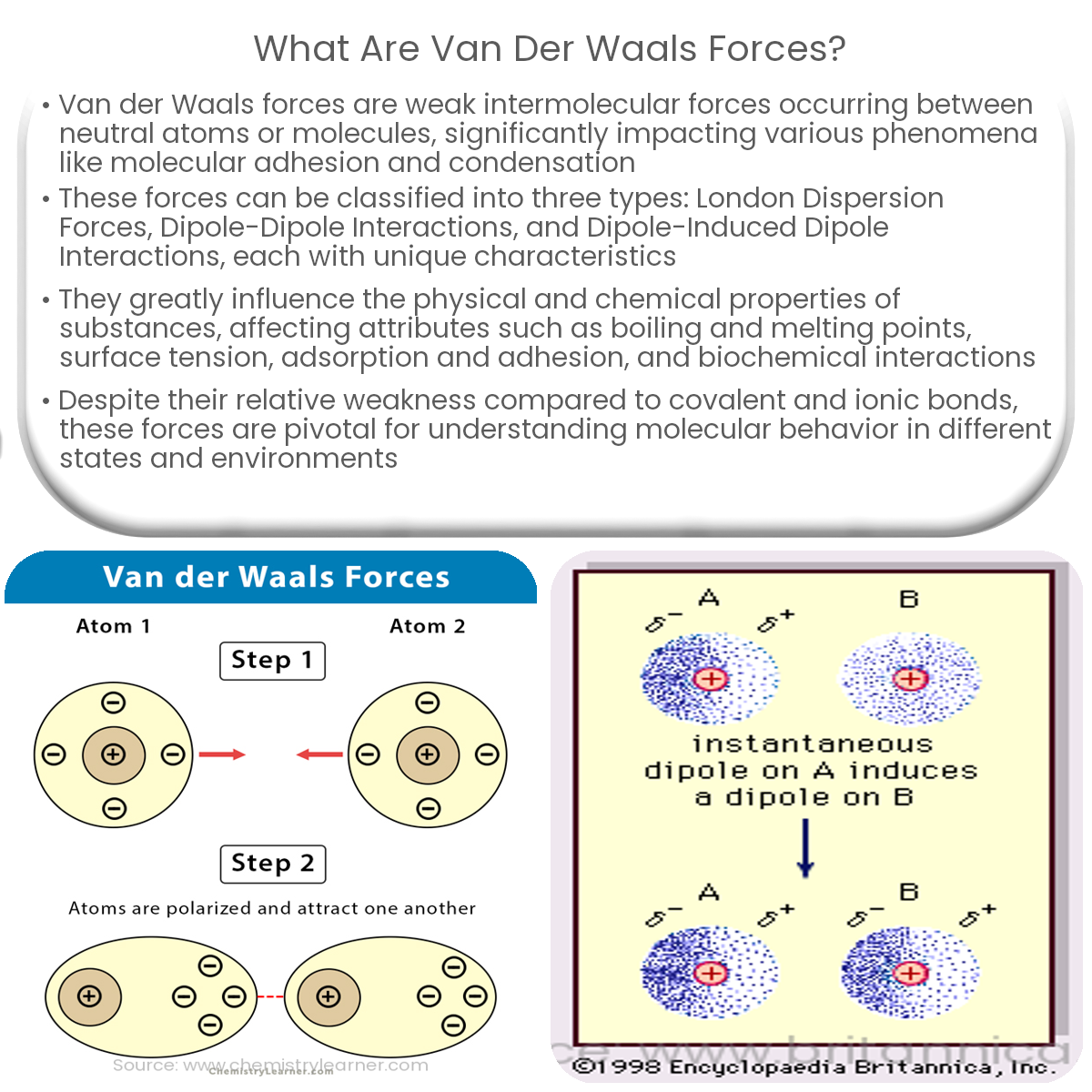
Learn about the van der Waals force, a distance-dependent interaction between atoms or molecules that is not based on chemical bonds. Find out its definition, types, examples, applications, and contrast with other intermolecular forces. Define and explain van der Waals forces. How do they hold molecules together. Learn their different types and importance, and check out a few examples. A equação de van der Waals mostrou-se mais precisa do que as equações anteriores; por isso os cientistas aceitaram o novo modelo. As forças de van der Waals são muito fracas e atuam apenas quando as moléculas estão muito próximas umas das outras.
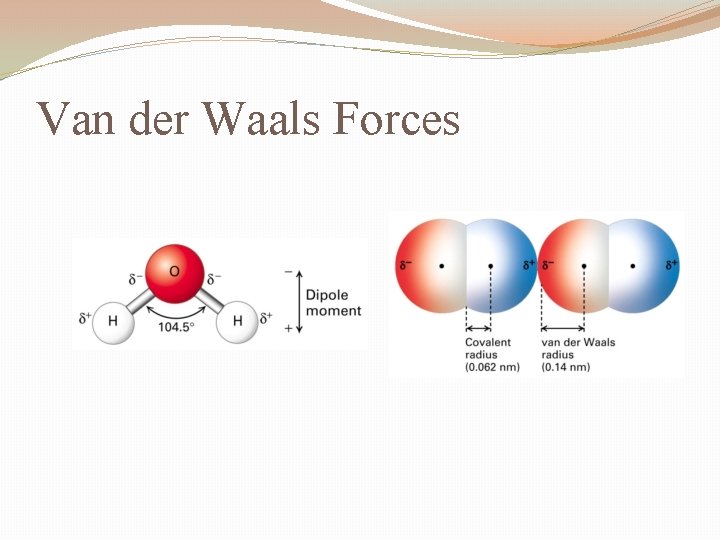
Saiba o que são as forças de Van Der Waals, que são interações intermoleculares fracas entre moléculas polares e apolares. Entenda as diferenças entre dipolo-dipolo, dipolo-dipolo induzido e dipolo instantâneo. Van der Waals forces, relatively weak electric forces that attract neutral molecules to one another in gases, in liquefied and solidified gases, and in almost all organic liquids and solids. The forces are named for the Dutch physicist Johannes Diderik van der Waals, who in 1873 first postulated. Learn about the attraction of intermolecular forces between molecules, such as London Dispersion Forces and dipole-dipole forces. Find out how polarizability, electron charge density, and molecular mass affect the strength and frequency of Van der Waals forces.
Van der Waals forces are electrostatic forces caused by a temporarily fluctuating dipole moment arising from a brief shift of orbital electrons to one side of an atom or molecule, which creates a similar shift in adjacent atoms or molecules (Lutzow et al., 2006). Van der Waals forces are weak intermolecular attractions between atoms or molecules, arising from temporary or permanent dipoles. These include London dispersion forces, dipole-dipole interactions, and induction forces, which are crucial for the physical properties of various substances. Learn what van der Waals forces are, how they work, their types, strength, examples, and importance in chemistry and biology.
Get the Full Details
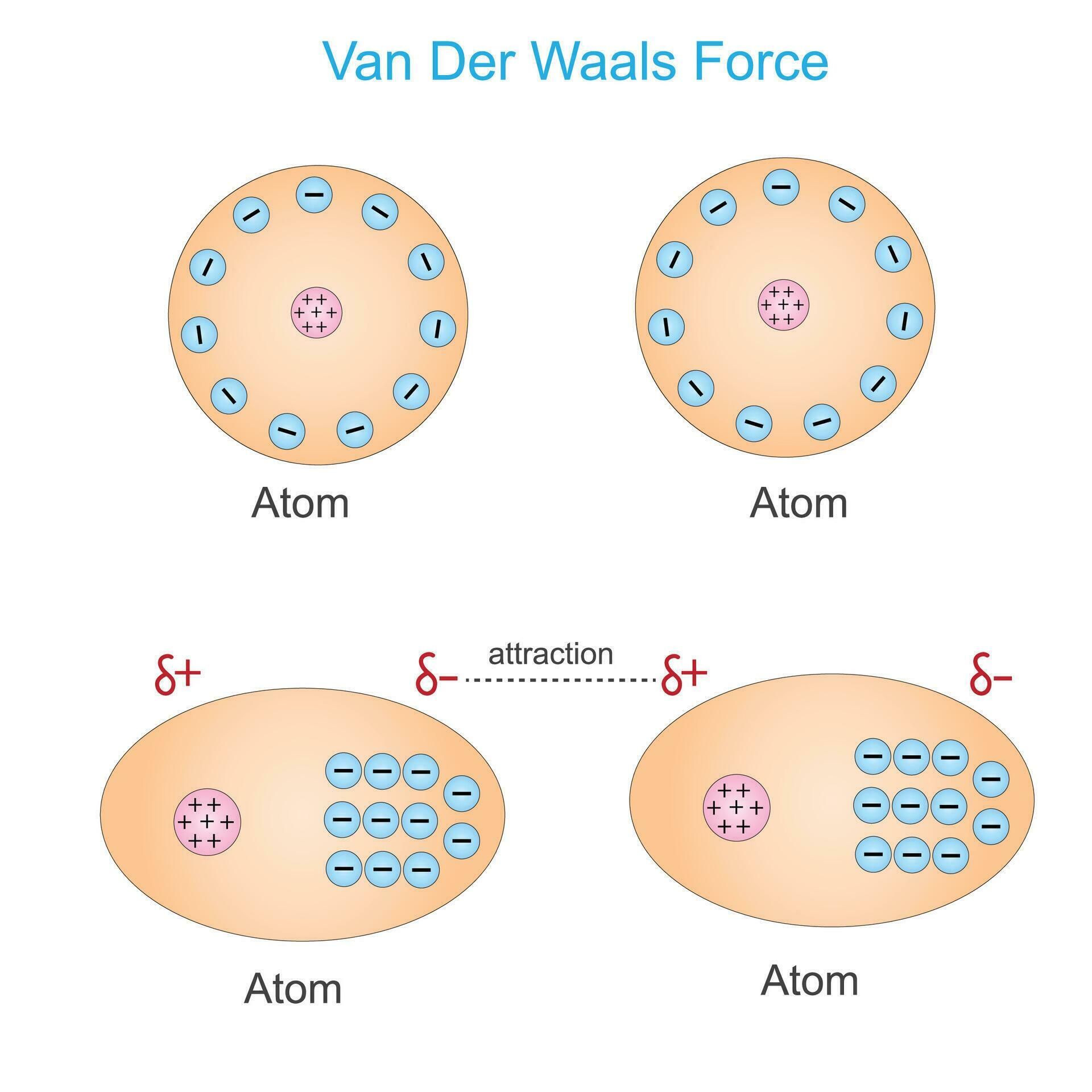
As forças de Van der Waals são interações atrativas ou repulsivas de curta distância que atuam entre moléculas ou átomos. As forças de van der Waals são forças fracas quando comparadas às forças químicas que ligam as moléculas comuns - tão fracas que a maioria das colisões dímero-monômero irá destruir (dissociar) o dímero. Forças de Van der Waals é um termo geral usado para definir a atração de forças intermoleculares entre as moléculas. Van der Waals forces are distance-dependent forces between atoms and molecules not associated with covalent or ionic chemical bonds. Sometimes the term is used to encompass all intermolecular forces, although some scientists only include among them the London dispersion force, Debye force, and Keesom force.