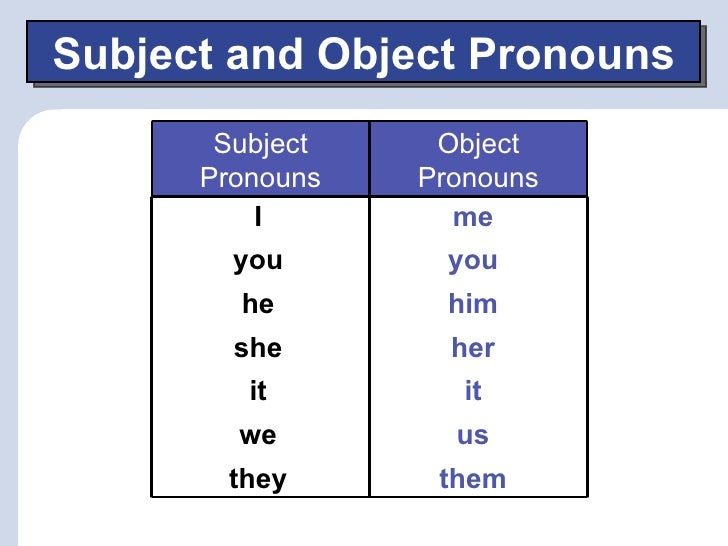
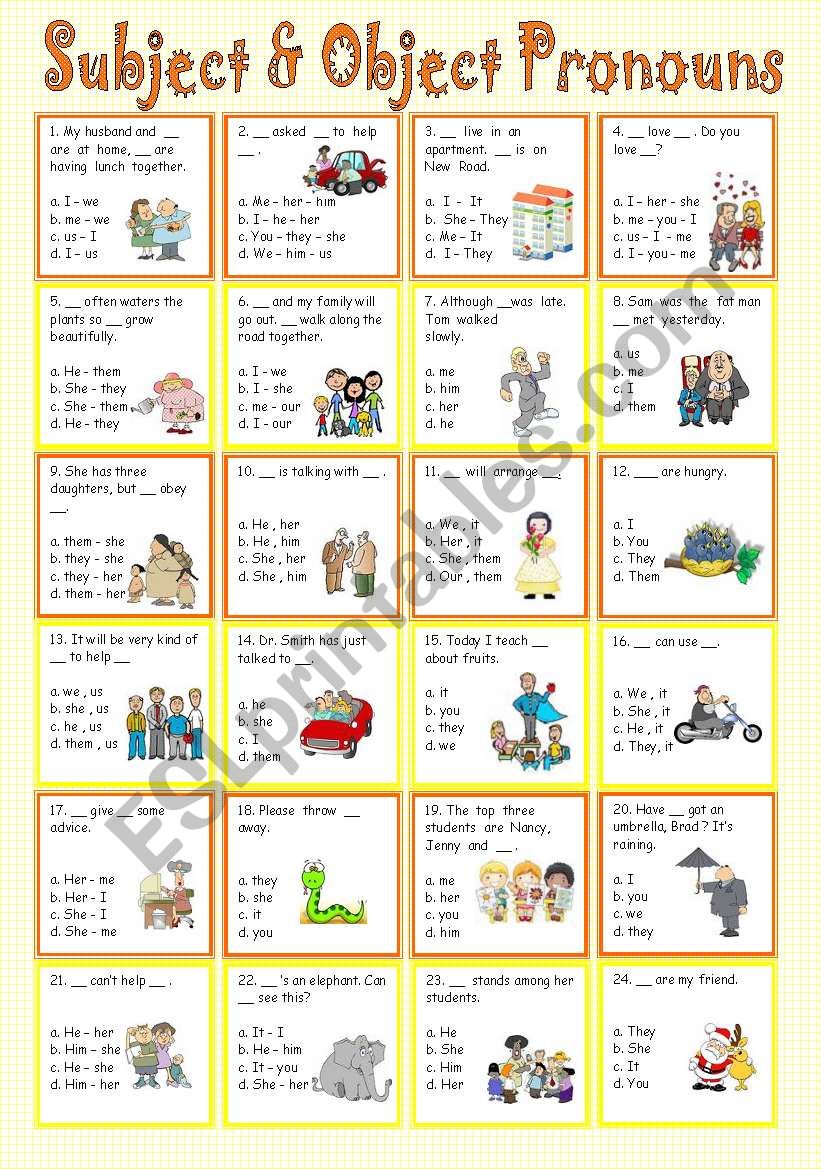
Fill in either a subject pronoun ("I," "we," "he," "she," "they," or "who") or an object pronoun ("me," "us," "him," "her," "them," or "whom") in each sentence. (Notice that 'it' and 'you' are the same when they're subject pronouns or object pronouns.) We use the object pronouns in most situations when the pronoun is not the subject of a verb. Uma das dificuldades mais comuns entre alunos de inglês é o uso correto dos pronomes pessoais (subject pronouns) e dos pronomes pessoais do caso oblíquo (object pronouns).
Conheça os subject pronouns. Saiba as regras de uso, as diferenças entre os object pronouns e confira uma tabela, exemplos e exercícios de vestibular. The most relevant categories for subject and object pronouns are personal pronouns, singular pronouns, and plural pronouns. Each of these categories plays a role in ensuring grammatical accuracy and clarity in communication. Discover essential tips on using subject pronouns and object pronouns correctly. Learn their roles in sentences with clear examples and helpful image.
Subject and object pronouns take the place of other nouns. This lesson shows you how to use subject and object pronouns properly. Exercises are included. Understand subject and object pronouns. Learn the definition of the two types of pronouns, examine their usage in writing, and find subject and Subject Pronouns vs. Object Pronouns: Clarify your grammar and refine your sentences. Master the art of pronoun usage today!
Get the Full Details

Welcome back to Simon Says Let's Learn English! 📚 In this lesson, we're breaking down an essential part of English grammar: What's the difference between subject pronouns and object pronouns? Object Pronouns in English I need help. This sentence is about the person (I). I is subject of this sentence. I is a subject pronoun. I need help. Can you help me? Me is the person receiving the help. Me is the object of this action. Me is an object pronoun. We cannot say: I need help. Can you help I? This is because the object pronoun often has a different form compared to the subject pronoun Pronouns are also common in shorter, everyday conversation as well. We can also divide them into two groups: subject and object pronouns. They get their names from the parts of speech that they