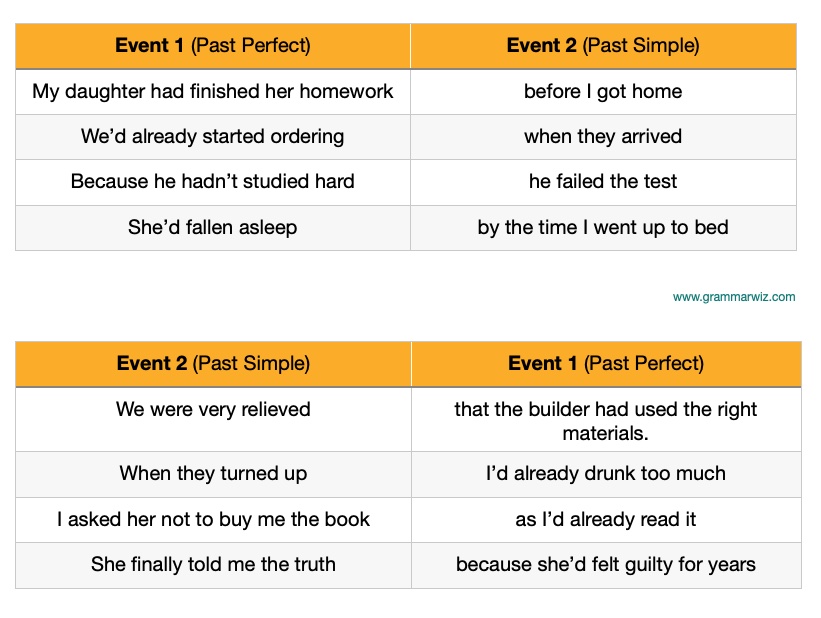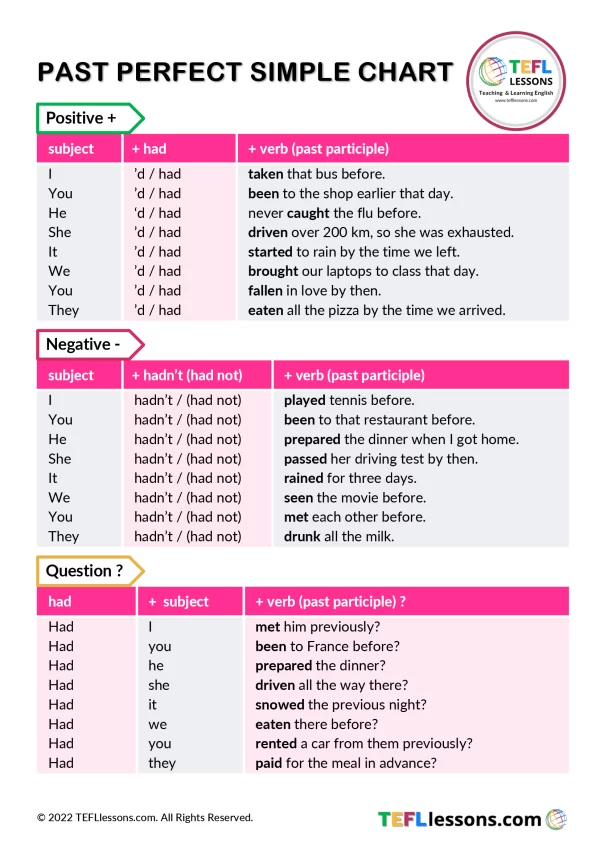
A principal diferença entre Simple Past e Past Perfect é que o Simple Past foca em quando uma ação aconteceu, enquanto o Past Perfect foca na ordem das ações no passado. If the action after "before" is a new action, use Simple Past. If the action after "before" started (and was not completed) before a certain time in the past, use Past Perfect. Identificar quando usar o Past Simple e o Past Perfect é essencial para expressar corretamente a cronologia dos eventos passados. Use o Past Simple para ações concluídas em um momento específico do passado.
We can use the past perfect with the past simple when we talk about two actions or events in the past. I phoned the office, but Emma had already left. We use the past perfect for the action that happened first. We often use already/just with the past perfect to say when it happened. The simple past tense refers to a completed action or event that occurred at a specific time in the past, while the past perfect tense refers to a completed action or event that happened before another action or event in the past. Saiba como usar o Past Perfect e conheça sua formação. Veja a diferença entre o Past Perfect Simple e o Past Perfect Continuous, assista um vídeo com resumo e faça exercícios com respostas comentadas.
Learn about the difference between the simple past and the past perfect in English grammar with Lingolia, then practise using these tenses in the interactive exercises. The past perfect simple is used to sequence events in the past to show which event happened first. The music started when the curtains opened. Past simple + past simple: the music started at the same time as the curtains opened. The music had (already) started when the curtains opened. Aprenda as diferenças entre o simple past e present perfect. Descubra como usá-los de maneira rápida, prática e correta!
Get the Full Details

Past perfect simple or past simple? - English Grammar Today - a reference to written and spoken English grammar and usage - Cambridge Dictionary Present Perfect Simple - Presente Perfeito Simples Os Perfect Tenses são formados com o presente simples do verbo to have (have / has), que, neste caso, funciona como verbo auxiliar, seguido do particípio passado do verbo principal. Você sempre deve utilizar o "present perfect" quando o período de uma ação for irrelevante ou não estiver especificado. Alternativamente, utilize sempre o "simple past" quando forem fornecidos ou solicitados os detalhes sobre o período ou lugar de uma ação.