
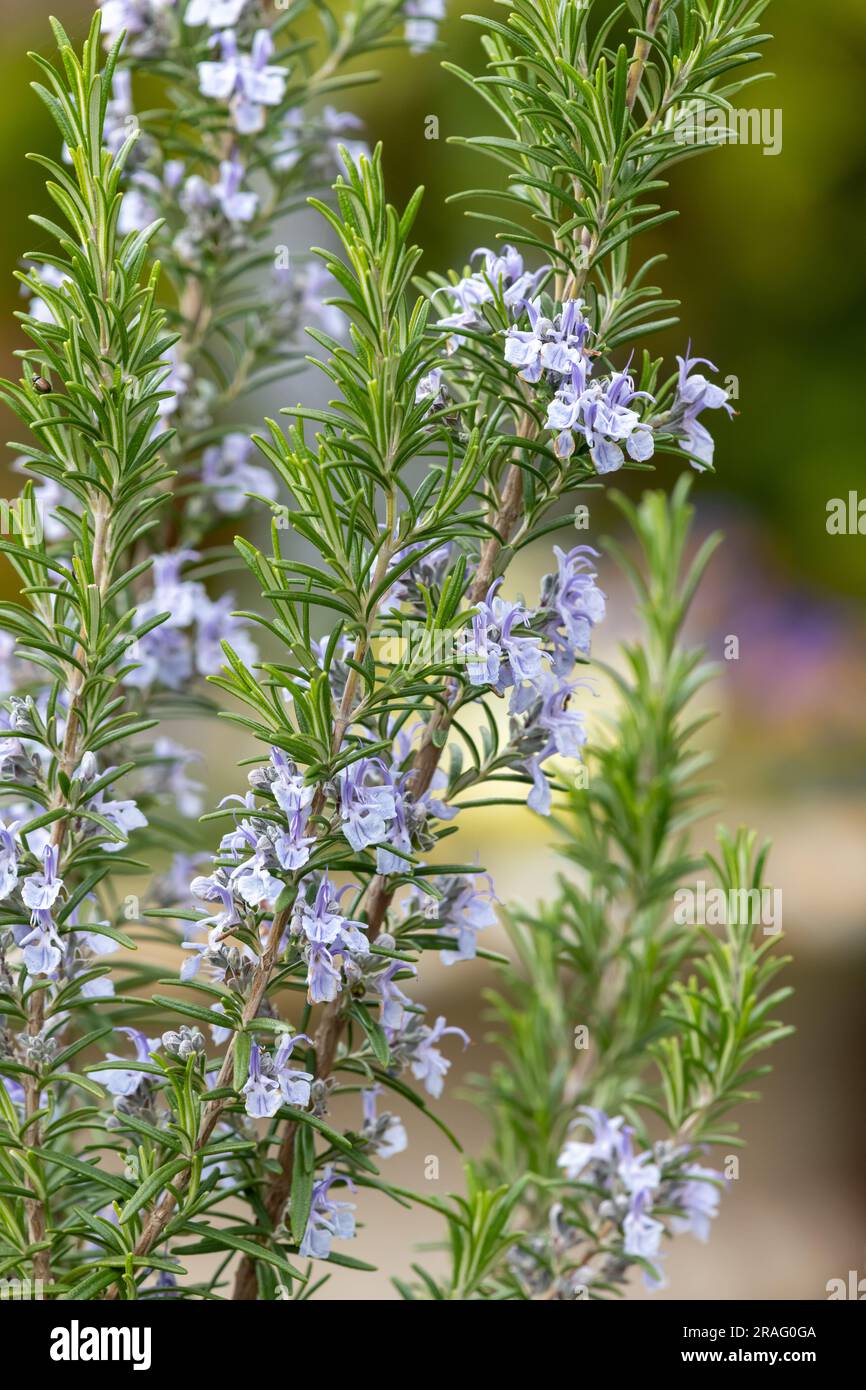
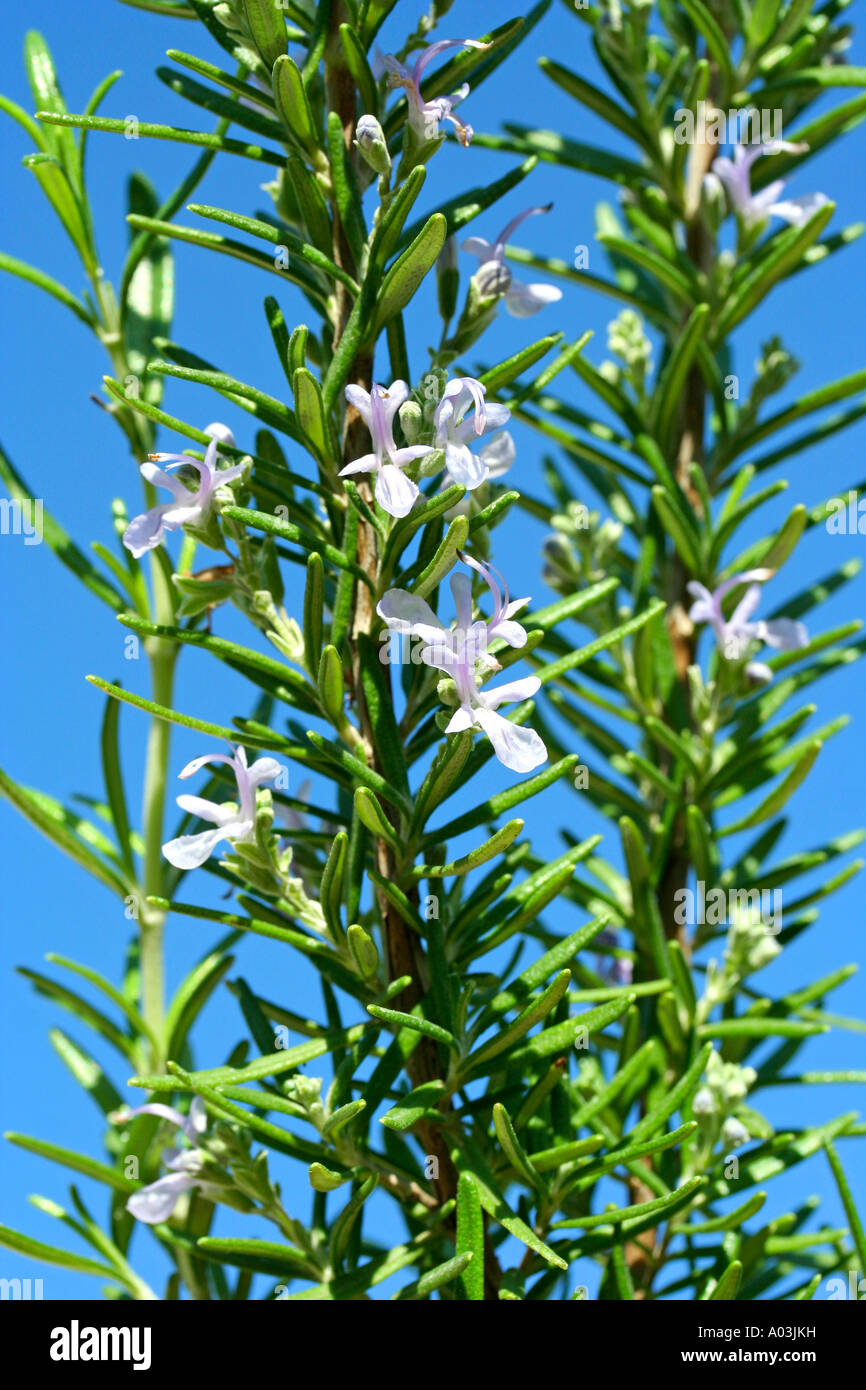
Salvia rosmarinus, synonym Rosmarinus officinalis, commonly known as rosemary, is a shrub with fragrant, evergreen, needle-like leaves and purple or sometimes white, pink, or blue flowers. It is a member of the mint family, Lamiaceae. The species is native to the Mediterranean region. Native to the dry, rocky areas of the Mediterranean region, Rosemary (Rosmarinus officinalis or Salvia rosmarinus) is a popular aromatic herb commonly grown for its decorative, medicinal, culinary uses, and ornamental garden appeal. The taxonomy of rosemary was revised in 2017, when it was moved from the genus Rosmarinus to Salvia and reclassified from Rosmarinus officinalis to Salvia rosmarinus.
Rosmarinus officinalis L. (syn. Salvia rosmarinus Spenn.), commonly known as rosemary, belongs to the genus Rosmarinus in the family Lamiaceae. Native to Europe and the Mediterranean coast of North Africa, this beneficial herb has been valued for its preservative, culinary, and medicinal properties. Rosemary (Rosmarinus officinalis L.) is a spice and medicinal herb widely used around the world. Of the natural antioxidants, rosemary has been widely accepted as one of the spices with the highest antioxidant activity (PENG et al., 2005). Rosemary (Rosmarinus officinalis) is widely used in folk medicine, rosemary has a bittersweet taste, being used in breads, preparations containing meat and to adorn salads. The antioxidant properties of rosemary extract have received considerable attention in recent years, being recognized since ancient times. More recently, attempts have been made to determine the chemical structure of the
Salvia rosmarinus (rosemary), widespread in the Mediterranean region, and Salvia jordanii (formerly Rosmarinus eriocalyx), native to northwest Africa and southern Spain have long been widely recognized. Salvia granatensis (formerly Rosmarinus tomentosus) was first recognized as a separate species in 1941. Rosmarinus palaui was first described as a species in 2002, although recognition of this Research method A search was made with the databases PubMed, ScienceDirect and of Science for an update on rosemary pharmacological activities and main constituents. The search was performed using the terms 'rosemary', ' Rosmarinus officinalis ', 'rosmarinic acid', 'carnosol' and/or 'carnosic acid', published since 1990. Rosemary: A Field Guide A fragrant evergreen herb, Rosmarinus officinalis is a native of Mediterranean climates and happiest in a hot, dry garden. Rosemary's Latin name translates as "dew of the sea," a reference to the fact that this hardy, drought-tolerant herb can survive on nothing more than water vapor carried on the breeze.
Get the Full Details
Rosemary (Rosmarinus officinalis L.) of the Lamiaceae family represents an evergreen medicinal plant with various health-promoting pharmacological effects. This paper provides a complete overview of diverse biological activities of rosemary extracts, essential oils as well as their numerous bioactive compounds, ranging from antioxidative, anti-inflammatory, and antimicrobial over cognitive Topical application is an important administration route for drugs requiring local action on the skin, thereby avoiding their systemic absorption and adverse side effects. Rosmarinus officinalis L. (syn. Salvia rosmarinus Spenn.), popularly known as rosemary, is an aromatic plant with needle-like leaves belonging to the Lamiaceae family. Rosemary has therapeutic properties and has been used in Rosmarinus officinalis, L. originating from the Mediterranean region is an aromatic plant from the Lamiaceae family. The province of Murcia (Southeast Spain) is one of the major processors and importers of rosemary. In the United States and Europe, rosemary is a unique spice commercially available for use as an antioxidant [5].
:max_bytes(150000):strip_icc()/blossoming-rosemary-plant-480708916-0a23ac6de5364254aee1d32542d4a6df.jpg "Rosemary Plant Varieties Australia at Charles Kintore blog")


