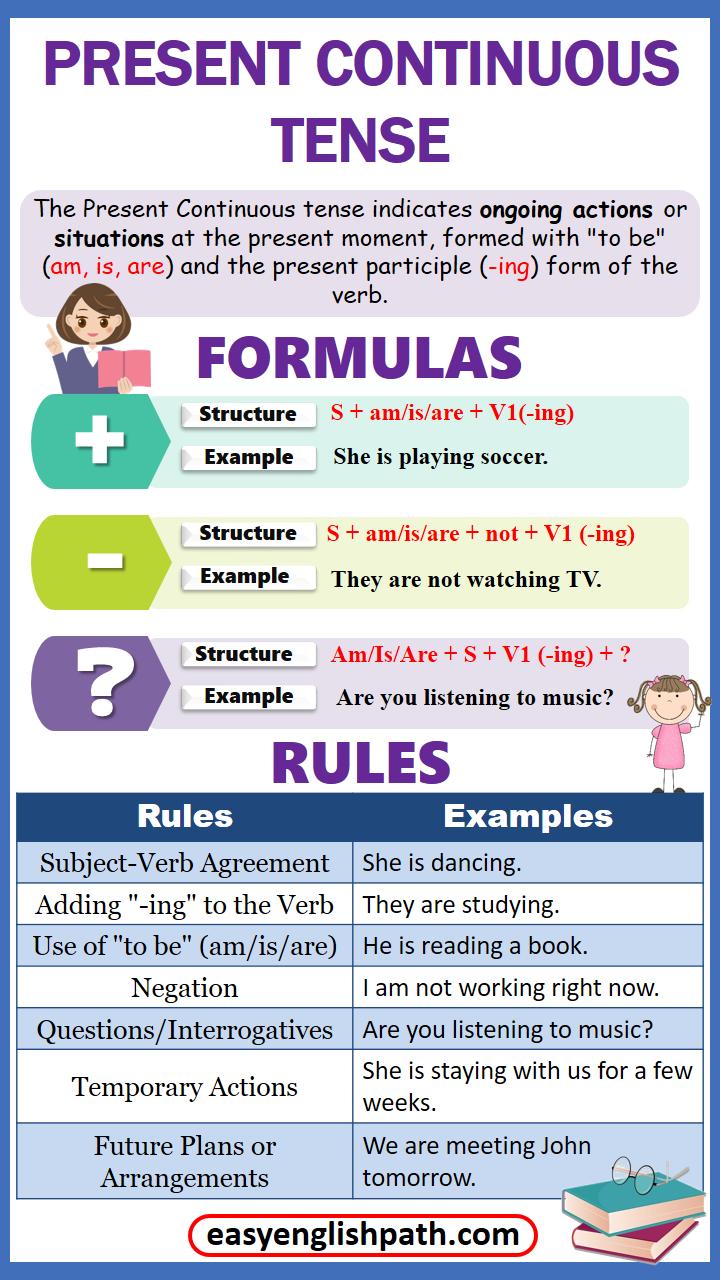
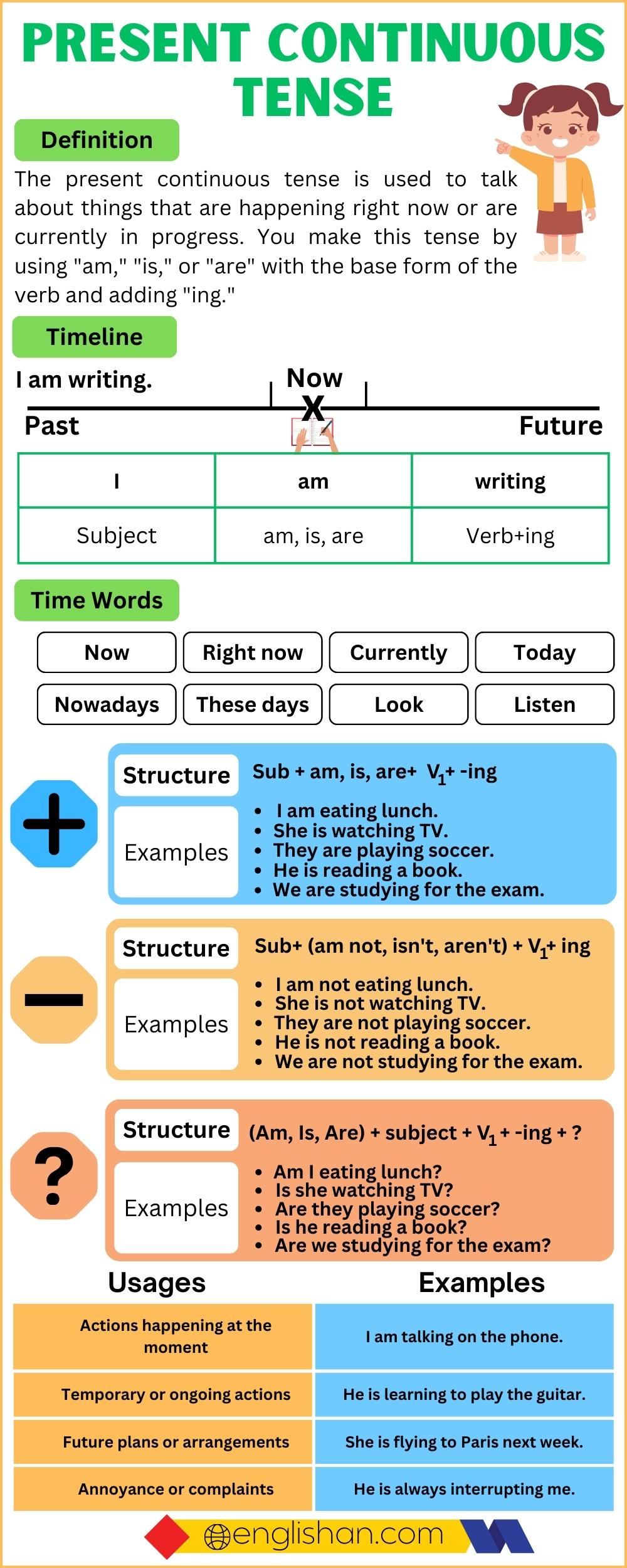
Understand the difference between present simple and present continuous with clear explanations, real examples, and when to use each tense correctly. We can't use any continuous tense (including the present continuous tense, of course) with stative verbs. Click here for more information about the present simple tense. Yes, present continuous and present progressive mean the same tense in English. For example, "She is studying" is labeled both ways, depending on the grammar book or region.
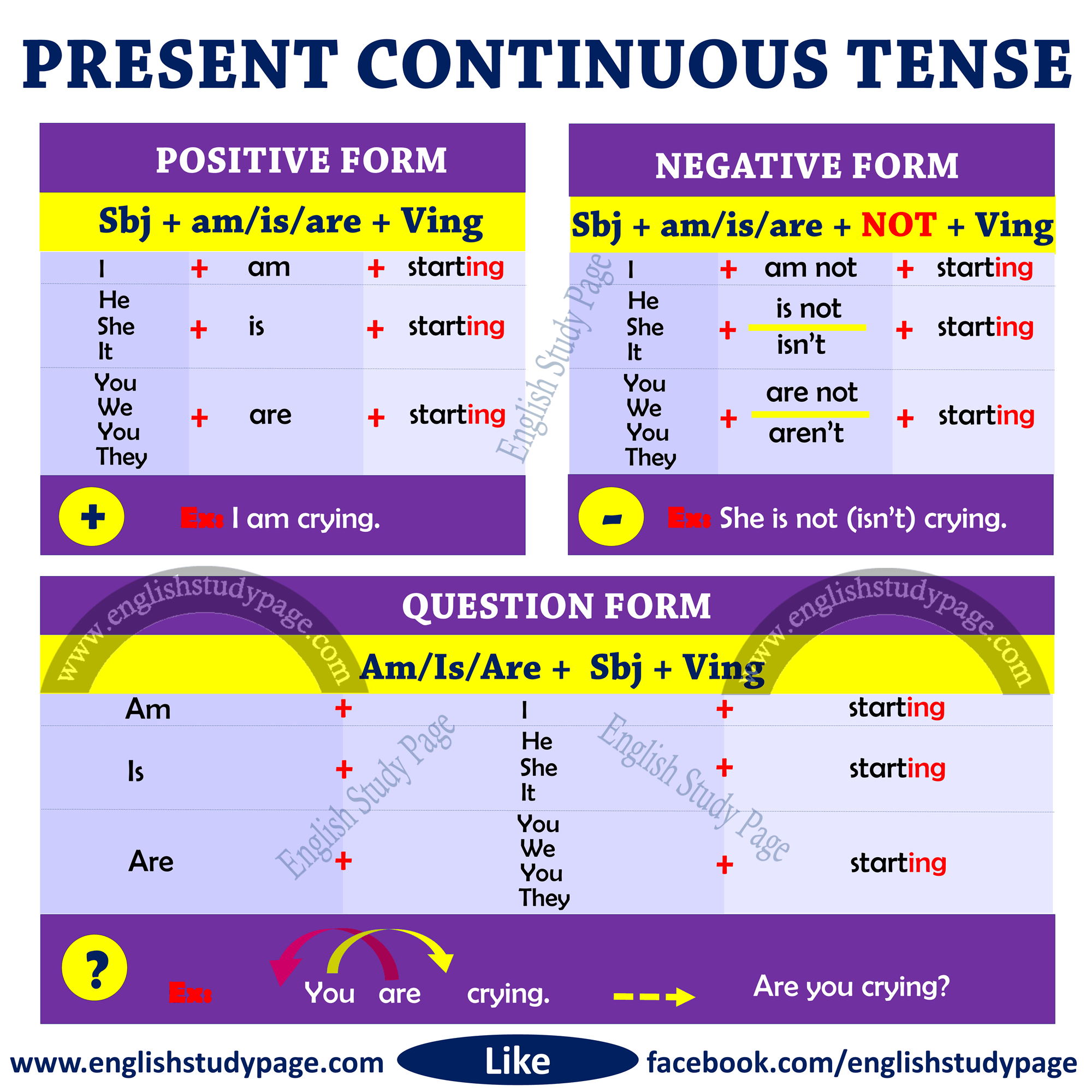
Practice Present Simple vs. Present Continuous exercises! Improve your English grammar and learn how to use these tenses correctly through simple, practical exercises. This table is based on the sentence "I am eating," demonstrating the positive, negative, and question forms in the Present Continuous tense for various pronouns. Learn when to use present simple or continuous in this B1 Intermediate grammar lesson. Clear rules, charts and exercises. Practise now!
Learn the differences between Present Simple and Present Continuous tenses. Enhance your grammar skills by mastering actions happening now or regularly. Present continuous or present simple exercises: affirmative, negative, interrogative. Present progressive. Esl, esol, ielts Introduction The simple present tense is often confused with the present continuous tense. This page will explain when to use each one. 1. The simple present tense
Get the Full Details
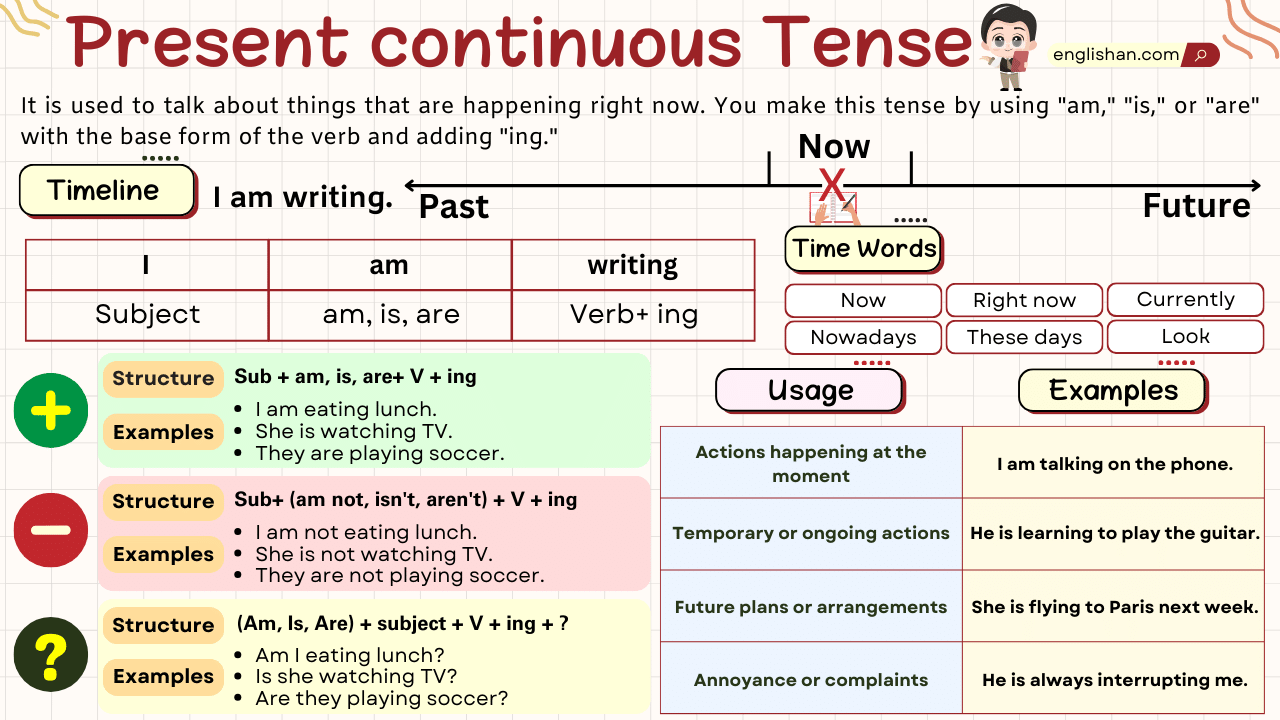
Simple Present - Present Progressive Certain Verbs The following verbs are usually only used in Simple Present (not in the progressive form). state: be, cost, fit, mean, suit Example: We are on holiday. possession: belong, have Example: Sam has a cat. senses: feel, hear, see, smell, taste, touch Example: He feels the cold. feelings: hate, hope, like, love, prefer, regret, want, wish Example Learn how to use the present simple and present continuous in this A2 grammar lesson. Clear rules, charts and exercises. Practise now! What's the difference between the Present Simple / Present Continuous and how to use them. We use the present simple tense when we want to talk about fixed habits or routines - things that don't change. We use the present continuous to talk about actions which are happening at the present moment, but will soon finish. Compare