O Present Perfect Continuous (Presente Perfeito Contínuo), também é chamado de Present Perfect Progressive (Presente Perfeito Progressivo). Ele expressa ações contínuas que iniciaram no passado e continuam até o presente ou que terminaram há pouco tempo. Learn how to use the simple present and simple past tenses in English with clear rules, translated examples, interactive exercises, and tips to avoid common mistakes. We commonly use the present simple to refer to the past when we want to make events sound as if they are happening now. For example, news headlines are commonly written in the present simple: Rebels attack government buildings. German Finance minister resigns.
Conjugação do verbo present em todos os tempos verbais, modos e pessoas. Procure a definição e a tradução em contexto para " present ", com exemplos de uso extraídos de comunicações reais. Quando descrevemos situações do nosso dia a dia, geralmente, utilizamos dois tempos verbais bastante básicos para qualquer situação comunicativa, o presente e o passado. Por isso, neste artigo, vamos aprender sobre as semelhanças e diferenças entre o Simple Present e o Simple Past. The form of the verb to be is am (contracted to 'm), is ('s) and are ('re) in the present tense and was/were in the past. To be is used as an auxiliary verb, to form continuous tenses and the passive, and as a main verb.
Revison (summary) of the use of verbs in the present and past tenses, for learners of English, with examples and an online exercise. Because of backshifting (as in You told me last night that you were 18!, where obviously the addressee would still be 18 at time of speaking), it's perfectly natural to use Past Tense taught even when the intended sense is exactly the same as it would be with Present Tense teach (addressee continues to teach some paid lessons). Of course, the Past Tense would be the only valid choice if the O Present Perfect pode indicar ações que iniciaram em algum momento do passado e que, no entanto, têm continuidade no presente ou foram concluídas recentemente. Já o Simple Past indica ações que iniciaram no passado e que já foram concluídas, ou seja, não apresentam uma continuação.
Get the Full Details

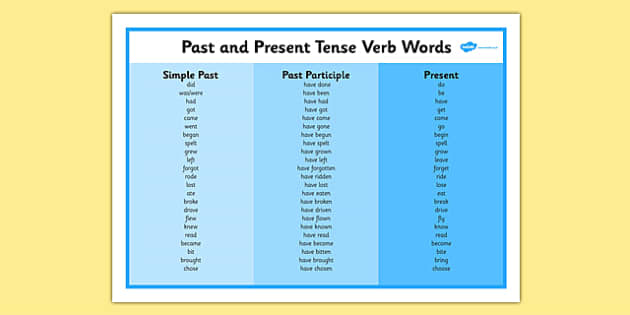
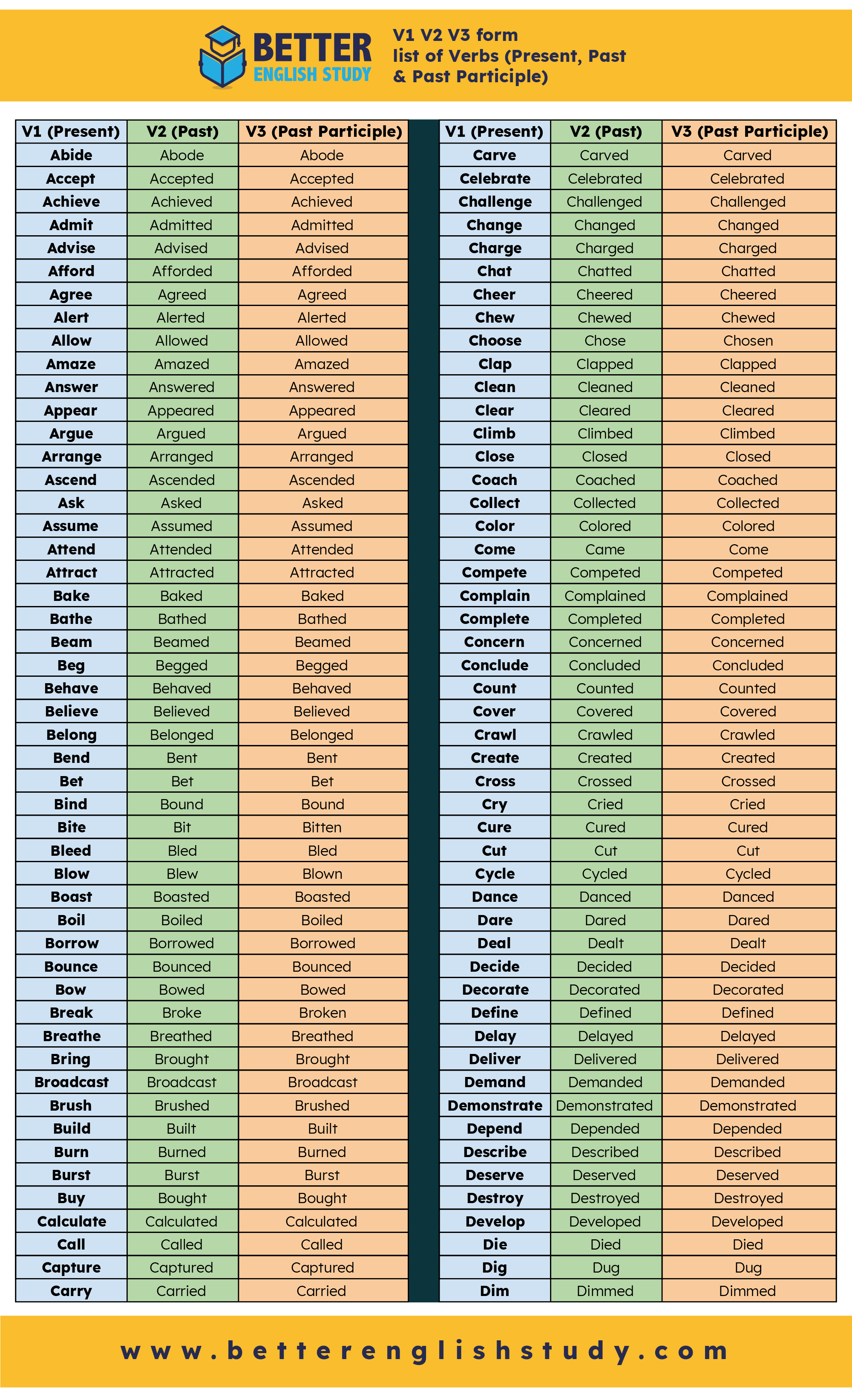
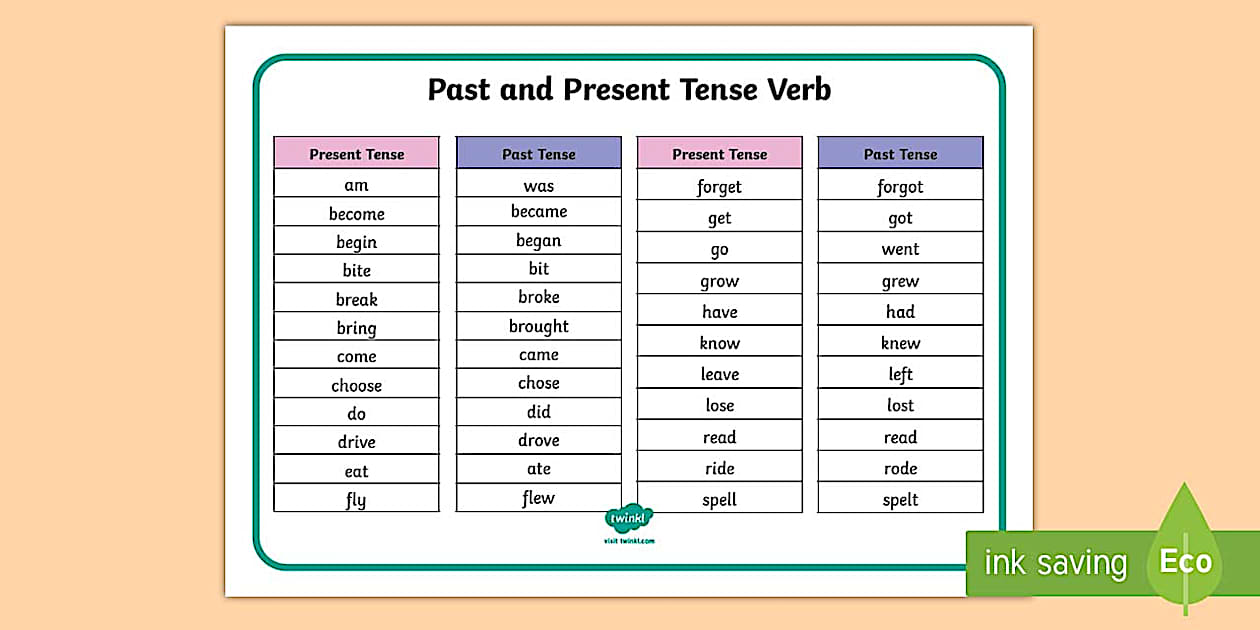
50 examples of present tense past tense and past participle V1, V2 and V3 When learning English you need to know the meaning of certain words first, and then sort the words appropriately according to grammatical rules. Verbs in a regular structure can be transformed with a simple rule, whereas in irregular verbs, this situation is slightly different. It may be a good start to make some Hi there. My name is Jochem. I make the show The Present Past, a show where I research how the present has been influenced by the past. History but connected to the present and fun! Every episode The past tense of "present" is "presented." Because "present" is a regular verb, it follows the standard -ed pattern - making it one of the more straightforward past forms in English. Once you understand this past of tense formation, you've unlocked the key form you'll need most often when talking about past events.