The verb "to be" changes to its past participle form "been" in the Past Perfect Tense. It is used to describe a person's identity, condition, location, profession, age, or characteristics that existed before another action or a specific time in the past. Conjugate the English verb be: indicative, past tense, participle, present perfect, gerund, conjugation models and irregular verbs. Translate be in context, with examples of use and definition. The irregular verb to be is the most complicated of all the English verbs—and it just so happens to be the most used, too. The to be verbs are am, are, is, was, and were, along with the bare infinitive be, the present participle being, and the past participle been. In this guide, we explain all you need to know about grammar for the verb to be. We'll share all the forms and when to use
The form of the verb to be is am (contracted to 'm), is ('s) and are ('re) in the present tense and was/were in the past. To be is used as an auxiliary verb, to form continuous tenses and the passive, and as a main verb. Verb to be — past perfect O past perfect traz ações realizadas e concluídas no passado. É como o passado do passado, equivalendo geralmente ao nosso pretérito mais-que-perfeito em português. Instructions Past simple - verb 'to be' We can use the past simple of the verb to be to talk about situations and states in the past. I was at my gran's house yesterday. She was with her friends last Saturday. We were happy yesterday. How to use it Use was for I, he, she and it. Use were for you, we and they. I was hungry this morning.
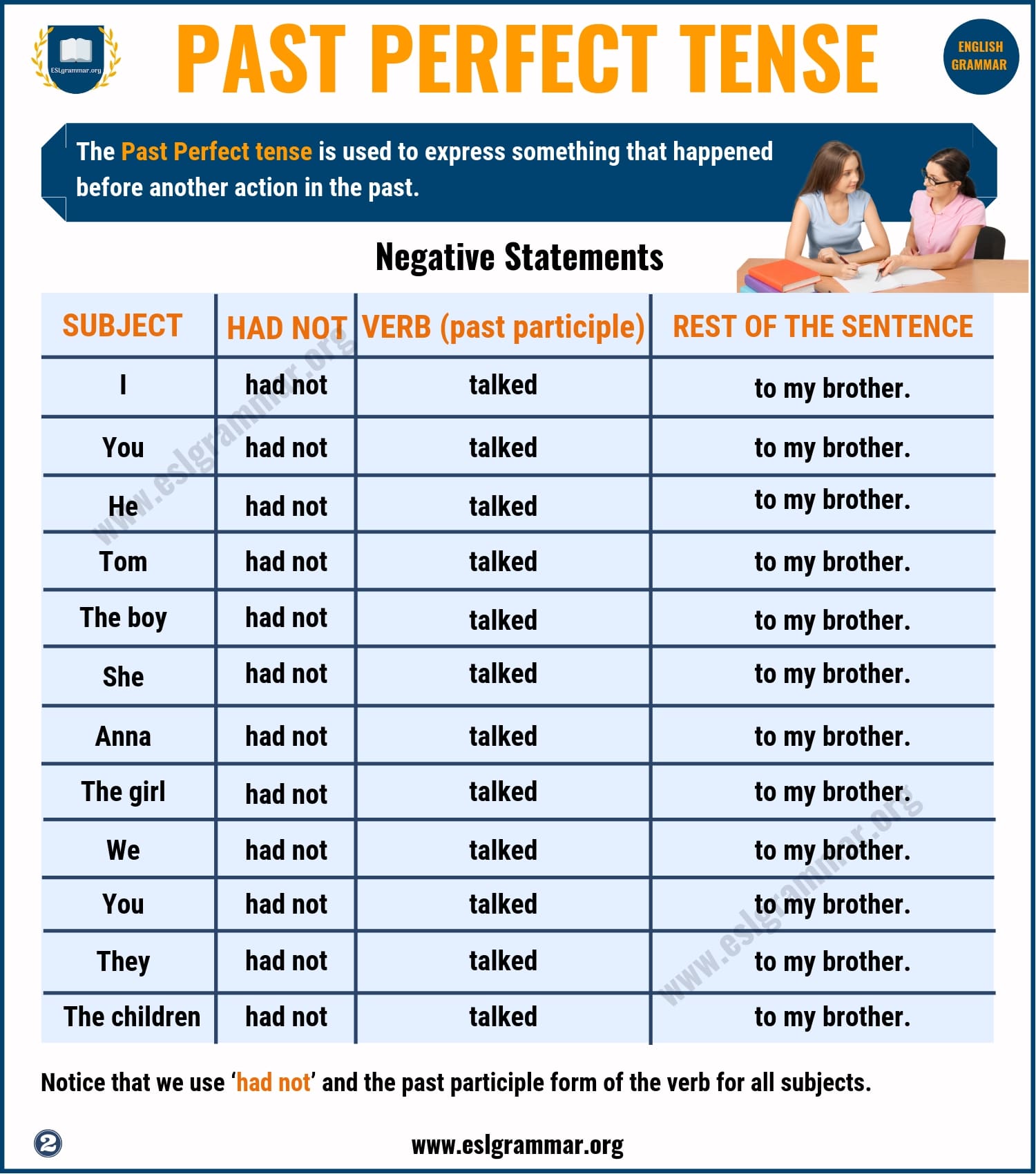
As an auxiliary, it serves the vital roles of forming the passive voice (The ball was hit by John) and the progressive tense (John was hitting the ball over the fence). Miss Hamrick could never make up a chant about the irregular forms of the verb to be because it doesn't have just one past-tense form like the other irregular verbs do. The perfect tenses use a conjugation of the auxiliary verb have with the past participle of the main verb. Continuous tense We use the continuous tenses (also known as the progressive tenses) for ongoing actions or actions that happen a while before completion. THE PAST PERFECT TENSE We don't use the past perfect a lot in English, but it is useful, and it sounds very good if you can use it correctly. Also, it's really easy to make - just the past simple of 'have' and the past participle. Click here to download this explanation as a PDF. Learn about USING the past perfect here.
Get the Full Details
![Past Perfect Tense [Action Verb, Be Verb, Possessive Form] - Blue Grammar](https://bluegrammar.com/wp-content/uploads/2025/04/Past-Perfect-Tense-Be-Verb-1024x576.png)
Present perfect The present perfect is created by using a present tense form of to have + the past participle been. Since been is the past participle for all conjugations, you just need to make sure that to have agrees with the subject. For the third person singular (he / she / it), you'll get has been, and all other subjects will Saiba tudo sobre o "present perfect". Entenda suas regras e os principais usos desse tempo verbal. Conheça também a diferença entre o "presente perfect" e o "simple past" Aprenda tudo o que você precisa saber sobre o verbo to be no simple past com a ABA English e junte-se ao curso gratuito para aprender ainda mais.
![Past Perfect Tense [Action Verb, Be Verb, Possessive Form] - Blue Grammar](https://bluegrammar.com/wp-content/uploads/2025/04/Past-Perfect-Tense-in-English-1024x576.png "Past Perfect Tense [Action Verb, Be Verb, Possessive Form] - Blue Grammar")