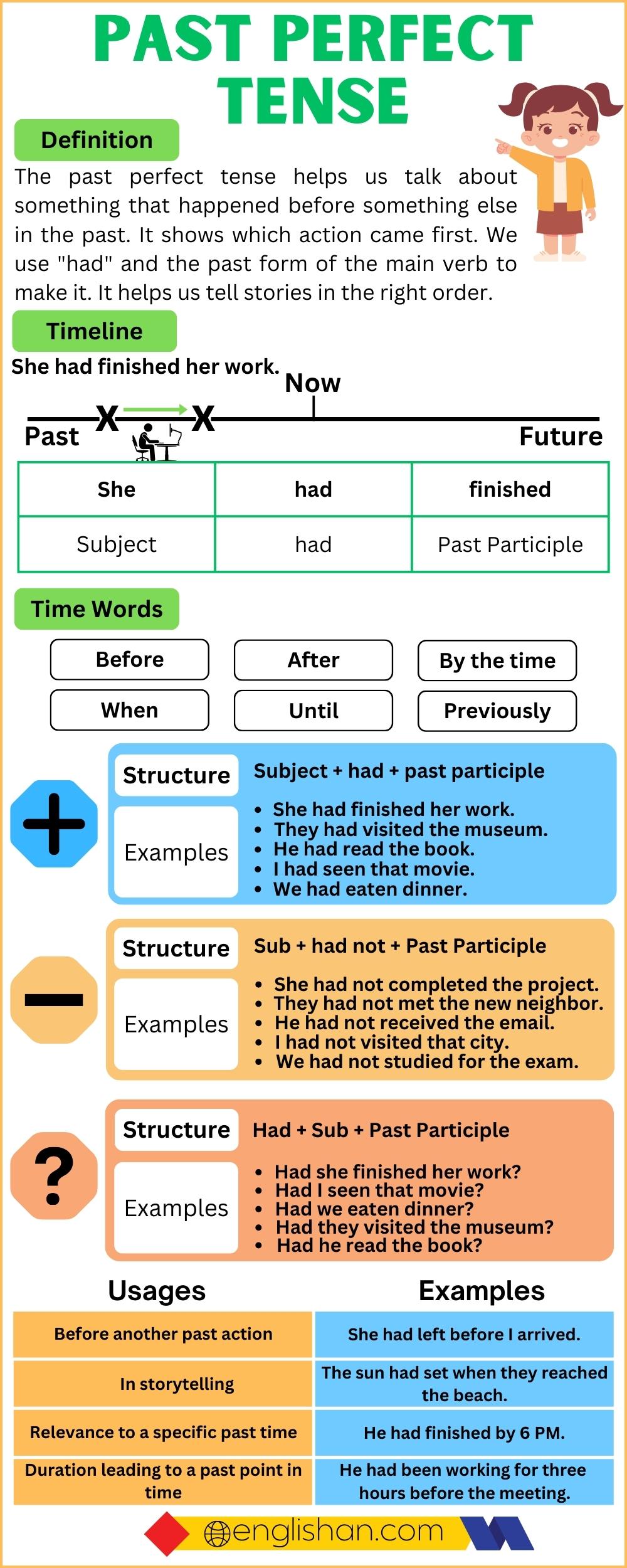
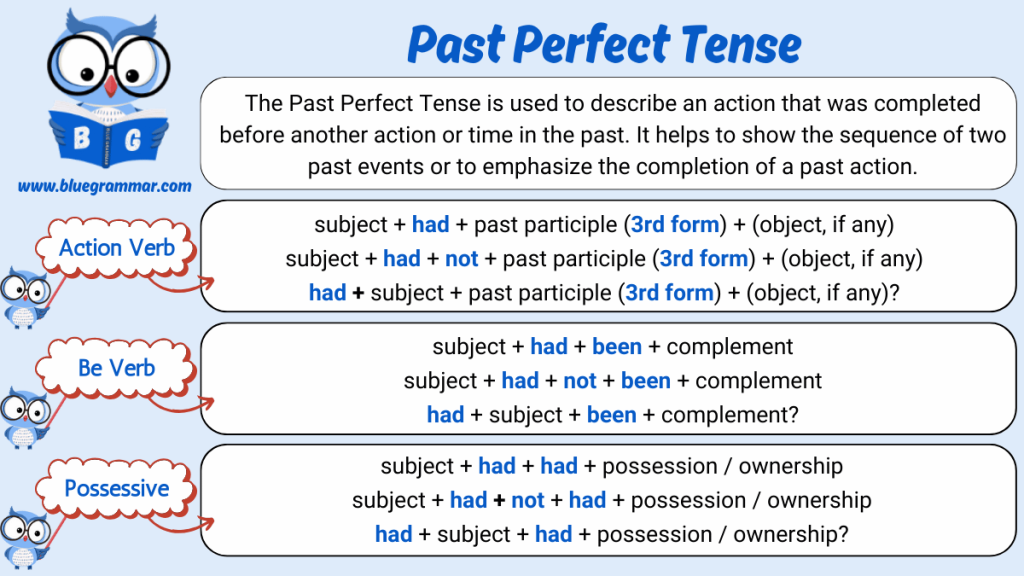
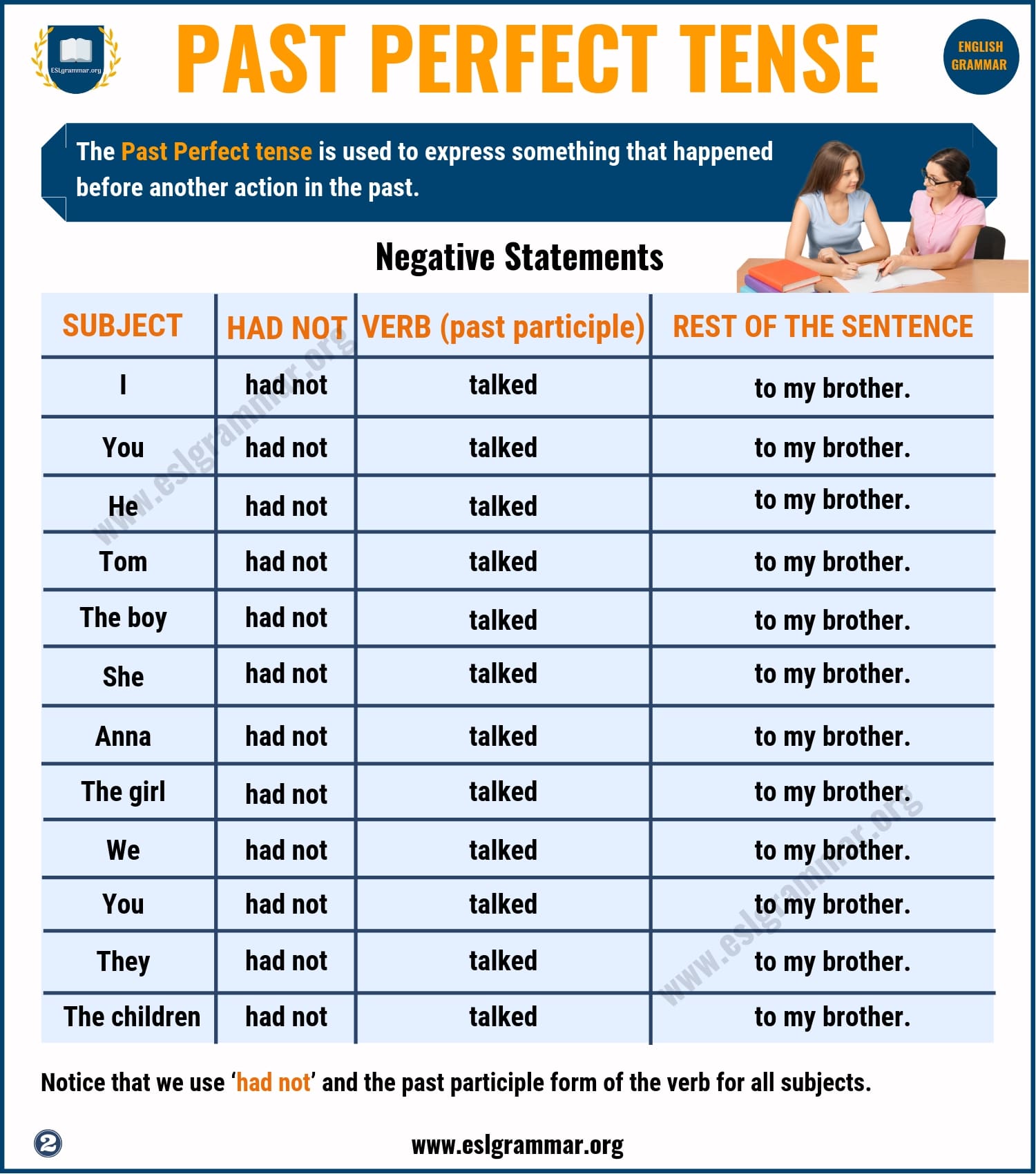
Learn about the difference between the simple past and the past perfect in English grammar with Lingolia's online tense comparison chart. In the free exercises, you can practise using these past tenses. We can use the past perfect with the past simple when we talk about two actions or events in the past. I phoned the office, but Emma had already left. We use the past perfect for the action that happened first. We often use already/just with the past perfect to say when it happened. The past perfect is used in the same way as the present perfect, but it refers to a time in the past, not the present. We use the past perfect: for something that started in the past and continued up to a given time in the past: When George died, he and Anne had been married for nearly fifty years. She didn't want to move.
The past perfect shows the earlier action and the past simple shows the later action. Usually the earlier action influences, explains or provides context for the later action. If the action after "before" is a new action, use Simple Past. If the action after "before" started (and was not completed) before a certain time in the past, use Past Perfect. Entender a diferença entre Simple Past ou Past Perfect é fundamental para expressar claramente a ordem dos eventos no passado em inglês. Usar esses tempos corretamente melhora a clareza e precisão na comunicação escrita e falada.
Learn when to use the past perfect tense with these rules and examples. Explore simple past vs. past perfect and how to use the past perfect tense formula. The past perfect tense is an English verb tense used to describe a completed activity in the past. It is used to emphasize that an action was completed before another action took place. Learn the past perfect tense: structure, usage, common time expressions, and correct applications for detailed and complex past events. Essential for mastering English!
Get the Full Details
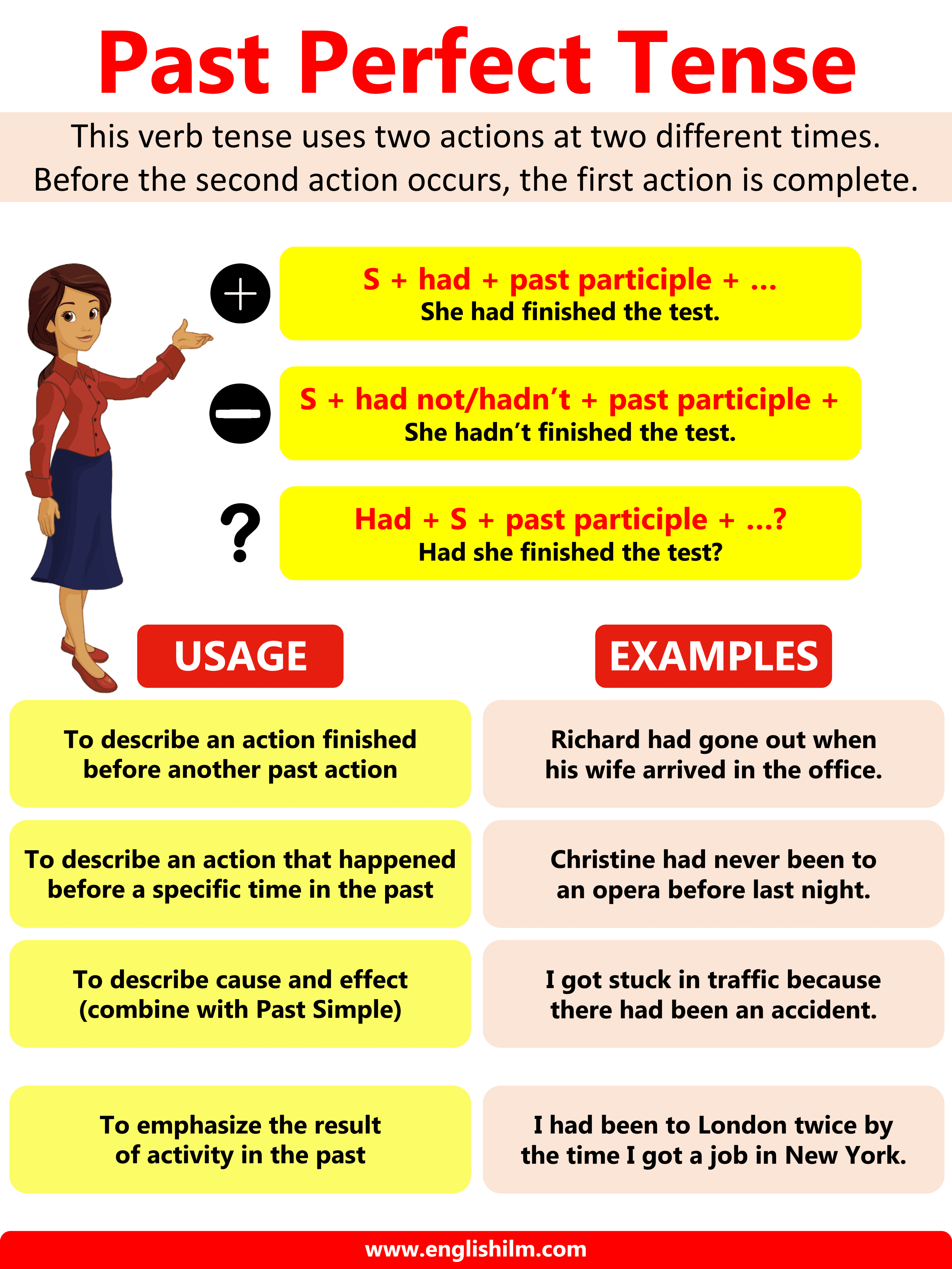
Functions of the past perfect The past perfect refers to a time earlier than before now. It is used to make it clear that one event happened before another in the past. It does not matter which event is mentioned first - the tense makes it clear which one happened first. In these examples, Event A is the event that happened first and Event B is the second or more recent event: O past perfect é usado para expressar uma ação que ocorreu no passado antes de uma outra ação ter ocorrido. Esse tempo verbal é marcado pela forma: Sujeito + had + verbo principal no O Past Perfect Tense é o tempo verbal que trata das ações mais antigas no passado. Vem aprender tudo sobre este tempo perfeito!