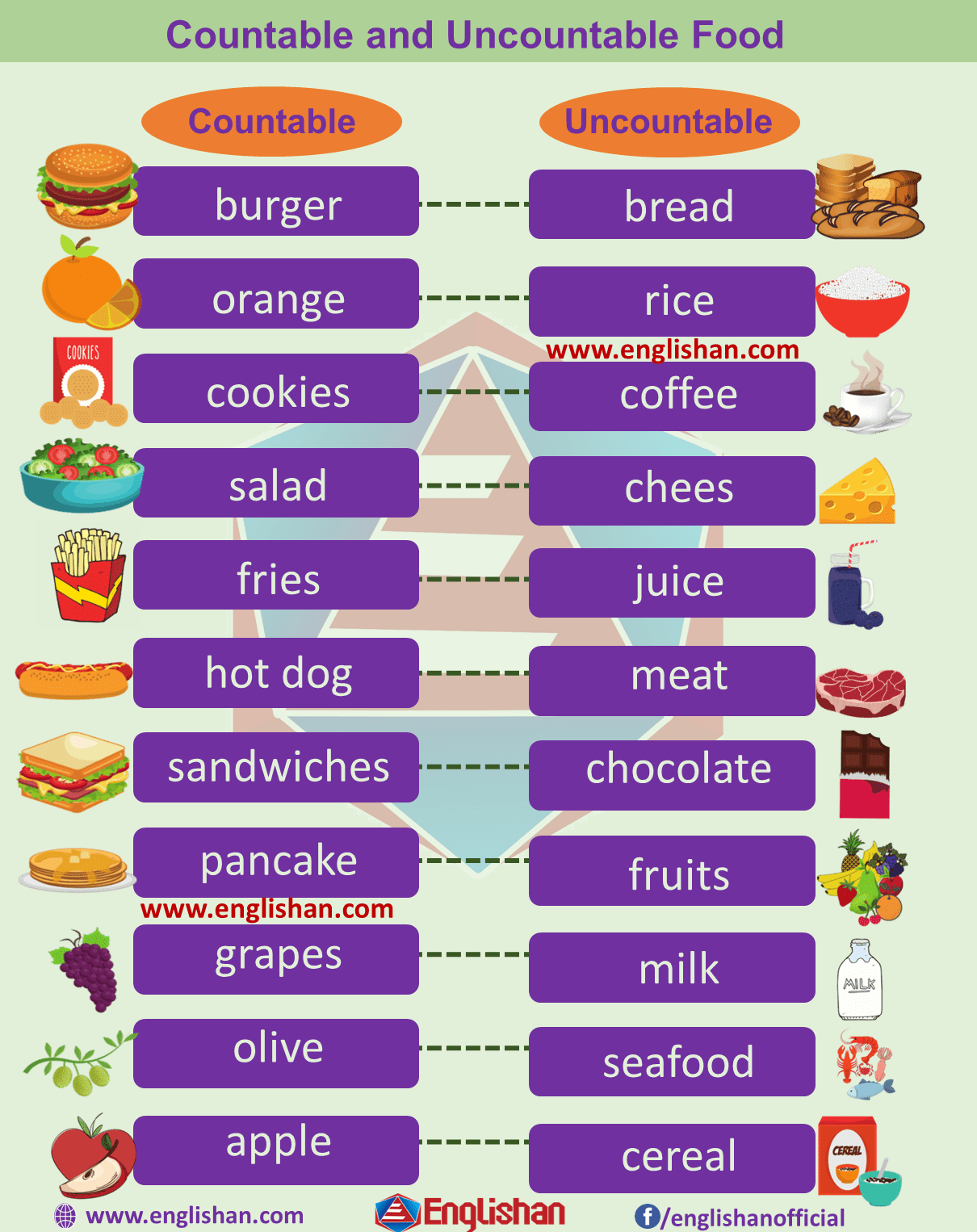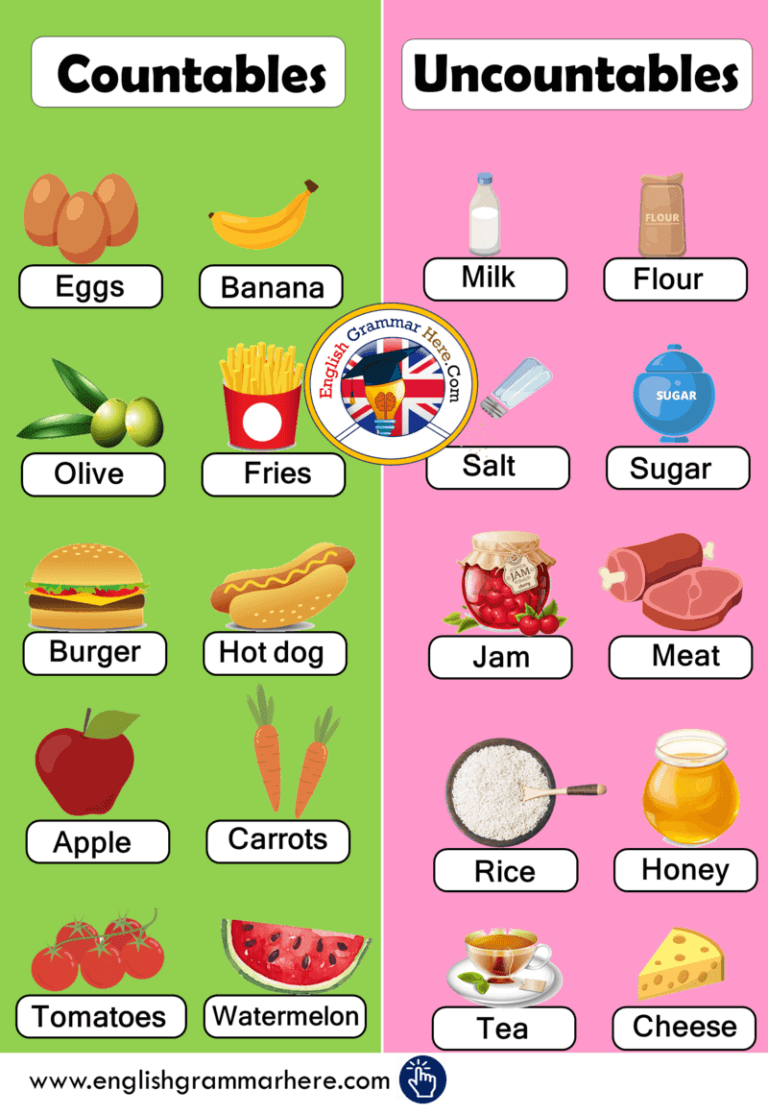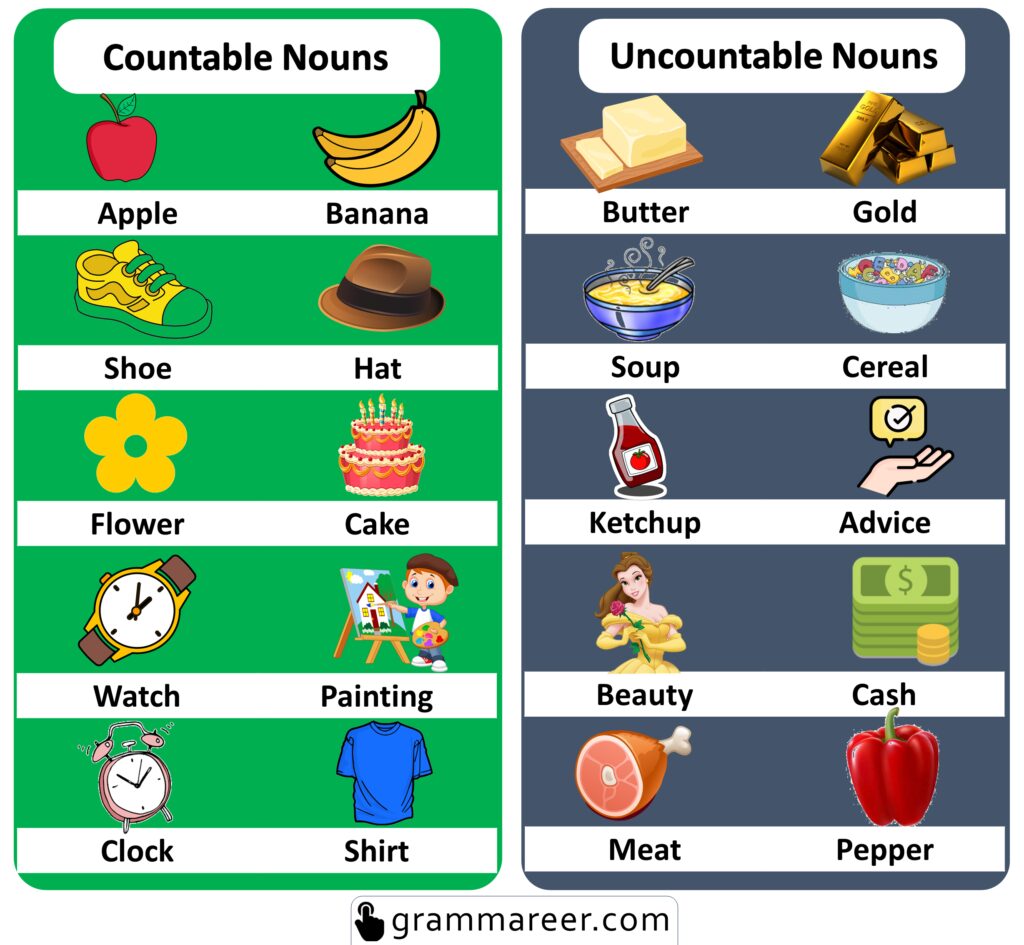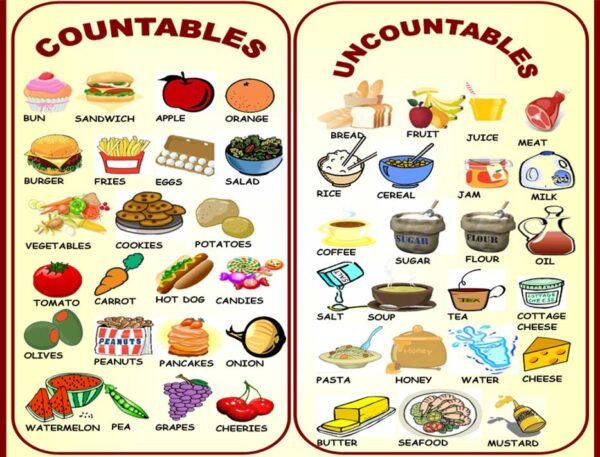
Nouns can be countable or uncountable. Countable nouns can be counted, e.g. an apple, two apples, three apples, etc. Uncountable. Learn countable and uncountable nouns with rules, examples, differences, quantifiers, common mistakes, and grammar tips. Mas o que isso significa? Nouns são substantivo, ou seja, palavras que designam pessoas, lugares, coisas, etc. Countable nouns.
Nouns can be countable or uncountable. Countable nouns can be counted, e.g. an apple, two apples, three apples, etc. Uncountable nouns cannot be counted, e.g. air, rice, water, etc. Aprenda o que são e como usar os countable and uncountable nouns, que são substantivos contáveis e incontáveis no inglês. Veja exemplos, diferenças com o português e vídeos explicativos. Learn the difference between countable and uncountable nouns with examples, definitions and exercises. Find out how to use a/an, some and plurals with countable nouns, and how to use some with uncountable nouns.
Está com dúvidas nas aulas de inglês sobre countable e uncontable nouns? Entenda, aqui, como e quando usar, bem como exemplos práticos e exercícios para testar os seus conhecimentos. Learn the differences between countable and uncountable nouns, identify them, and use quantifiers and articles correctly in your writing with examples Instructions Nouns - countable and uncountable We can use countable nouns for things we can count. They can be singular or plural. I've got a book, but she's got two books. We can use uncountable nouns for things we can't count. There's some bread and cheese on the table. How to use them Use a or an before singular nouns.
Get the Full Details

Other examples of countable nouns include house, idea, hand, car, flower, and paper. Uncountable nouns Uncountable nouns, or mass nouns, are nouns that come in a state or quantity that is impossible to count; liquids are uncountable, as are things that act like liquids (sand, air). Abstract ideas like creativity or courage are also uncountable. Countable nouns are things you can count, like apples or books, and can be singular or plural. Uncountable nouns are things you can't count, like water or information, and are always singular. Use a/an with adjectives for countable nouns, but not with uncountable nouns. Nouns in English grammar can be countable or uncountable. Countable nouns refer to individual things and we can use them in singular or plural (e.g. coin/coins). Uncountable nouns refer to things that are a whole or a mass and can't be counted (e.g. money). Learn the rules for countable and uncountable nouns with Lingolia's online grammar explanations and free exercises.