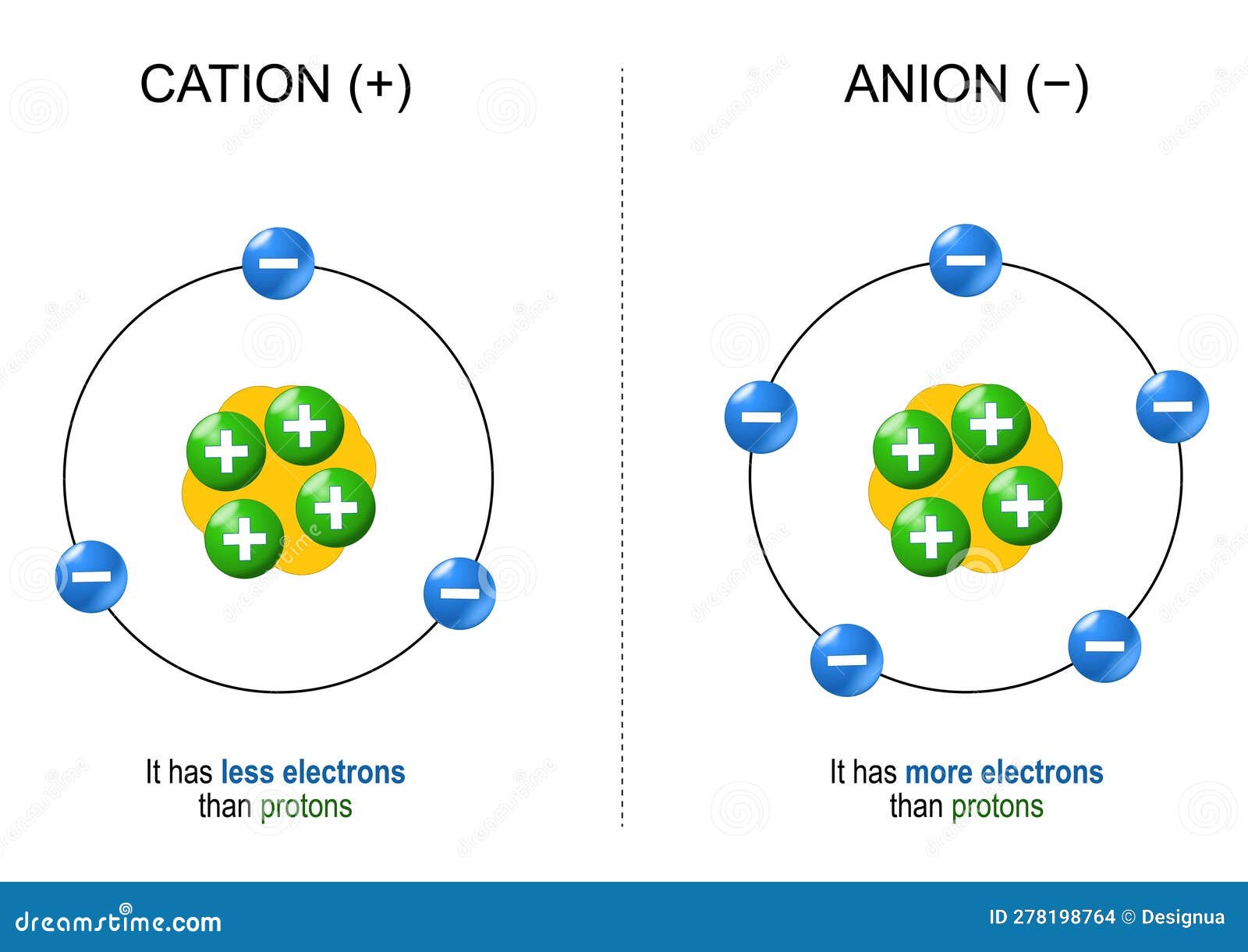
The chemical formula of a compound is always written with the cation first, followed by the anion. For example,. A cation is a positively charged ion formed by loss of electrons, while an anion is a negatively charged ion formed by gain of electrons. In chemical reactions, atoms become ions to achieve a stable electron configuration. The origin of their names is Greek: "anion" comes from the Greek word ana, meaning "up," referencing their movement towards the anode in an electric field. Meanwhile, "cation" stems from kata, meaning "down," as they are attracted to the cathode. These names reflect their behaviour in electrical and chemical contexts
Sodium chloride—what we know as table salt—is actually composed of an anion and a cation (written as NA+CL-). How to use cation vs. anion Remember, cations are positive ions—they are positively charged because they have lost one or more electrons and therefore have more protons than electrons. Differences Between a Cation and an Anion The first difference is that anions possess negative electrical charges while the cations have positive electrical charges. Secondly, during electrolysis, anions move to the positive electrode which is referred to as the anode. However, the cations migrate to the negative electrode called cathode. The smallest cation with no electron is hydrogen, which is substantially smaller than its parent atom. In crystalline materials, anions take up the majority of the lattice space, leaving cations to fill in the gaps. Cations are highly reactive in the gaseous state and will react with anions to generate neutral molecules.
This section describes the primary differences between cation and anion with the help of a comparison chart, properties and examples. Cation and Anion Definition. Cation and Anion Examples. Cation vs Anion. Cations carry positive charges. Anions carry negative charges. What's the difference between Anion and Cation? An ion is an atom or group of atoms in which the number of electrons is not equal to the number of protons, giving it a net positive or negative electrical charge. An anion is an ion that is negatively charged, and is attracted to the anode (positive elect
Get the Full Details
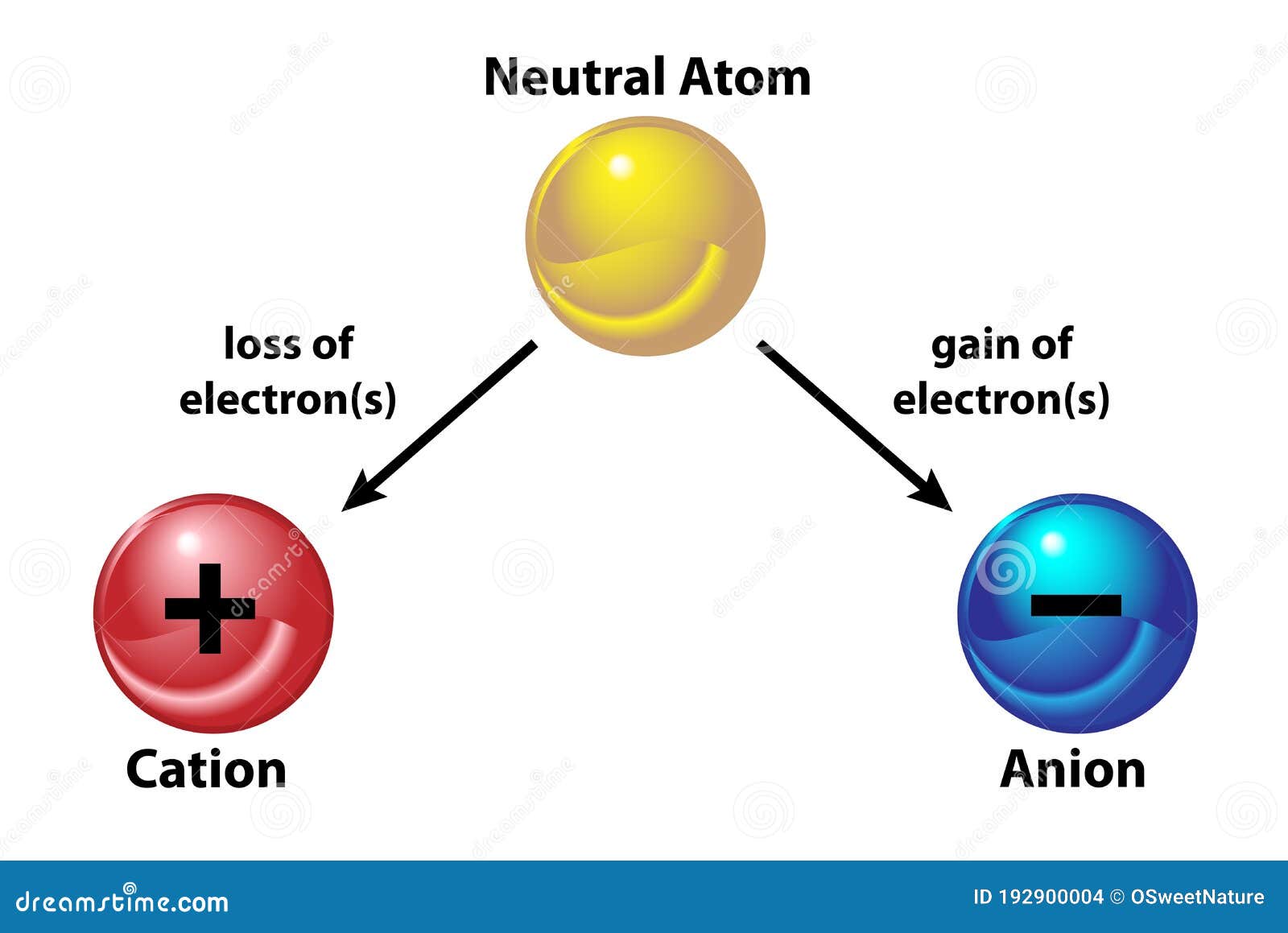
How to use Cation vs Anion-Remember that cations are positive ions, meaning they have lost one or more electrons and hence have more protons than electrons. Anions are negatively charged ions because they have acquired one or more electrons and so have more electrons than protons (cation vs anion). In Chemistry, anions and cations are both ions. Ions are atoms or molecules which have gained or lost one or more valence electrons, giving the ion a net positive or negative charge. Therefore, the main difference between a cation and an anion is the net electrical charge of the ion. A negative charge is as a result of a chemical species having more electrons than protons whereas a positive To find the cation and anion in a compound, we have to first ask if the compound is ionic. Most ionic compounds are made up of two elements: a metal and a non-metal. Sodium chloride is an ionic compound that comprises ions For example, the iconic ionic compound is sodium chloride, comprising sodium as the metal and chlorine as the


