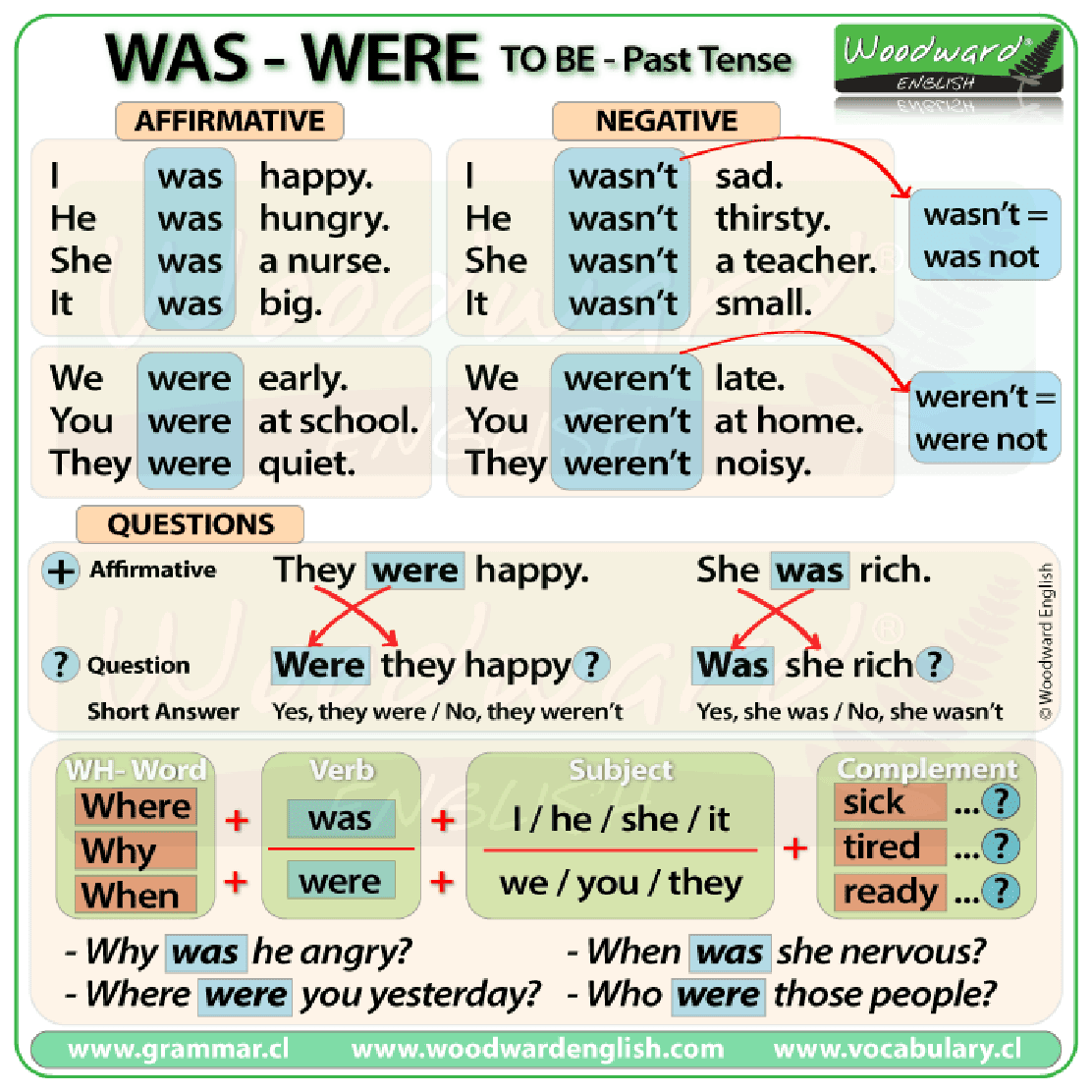
Verb to be in the past equivale tanto ao pretérito perfeito quanto ao pretérito imperfeito de ser/estar na língua portuguesa. Learn the past simple of to be: was and were. Clear rules for affirmative, negative, and question forms, common mistakes, examples, and a free quiz Try our interactive games to practice Was and Were (simple affirmative sentences), Was and Were in Questions (simple questions), To Be in the Past Tense (mixed) and Was and Were in Short Answers.
Aprenda como conjugar o Simple Past nas formas afirmativa, negativa e interrogativa. Confira explicações com regras, lista de verbos irregulares, frases de exemplos e tabelas de conjugação, e teste seus conhecimentos fazendo os exercícios. Exercícios práticos para fixar as regras de uso correto do verbo 'to be' no tempo verbal simple past. A equipe do site Tudo Sala de Aula preparou uma excelente atividade de inglês voltada para os alunos do 6º ano, 7º ano, 8º ano e 9º ano, especificamente sobre o passado simples do verbo "to be". Aprender o verb to be no simple past é essencial para quem deseja se comunicar bem em inglês. Ele aparece em narrativas, biografias, descrições e conversas do dia a dia. Neste artigo, vamos entender como o verbo funciona, analisar uma tabela completa e explorar frases práticas que ajudam a consolidar o aprendizado.
Do you want to practise using the past simple of the verb to be in English? We can use the past simple of the verb to be to talk about situations and states in the past. I was at my gran's house yesterday. She was with her friends last Saturday. We were happy yesterday. Use was for I, he, she and it. Use were for you, we and they. Apresentamos a seguir as formas do Simple Past (Passado Simples) do verbo to be. As formas afirmativas e interrogativas do Simple Past não possuem contração; a forma negativa é organizada da seguinte maneira: na 1ª coluna encontra-se a forma sem contração e na 2ª, mostramos a forma contraída: O verbo to be é um verbo irregular. De forma bem simples, isso significa que no passado (Simple Past) ele tem uma forma própria. Ou melhor, ele tem duas formas: was e were. Cada uma dessas formas tem o pronome/sujeito certo para ser usado.
Get the Full Details
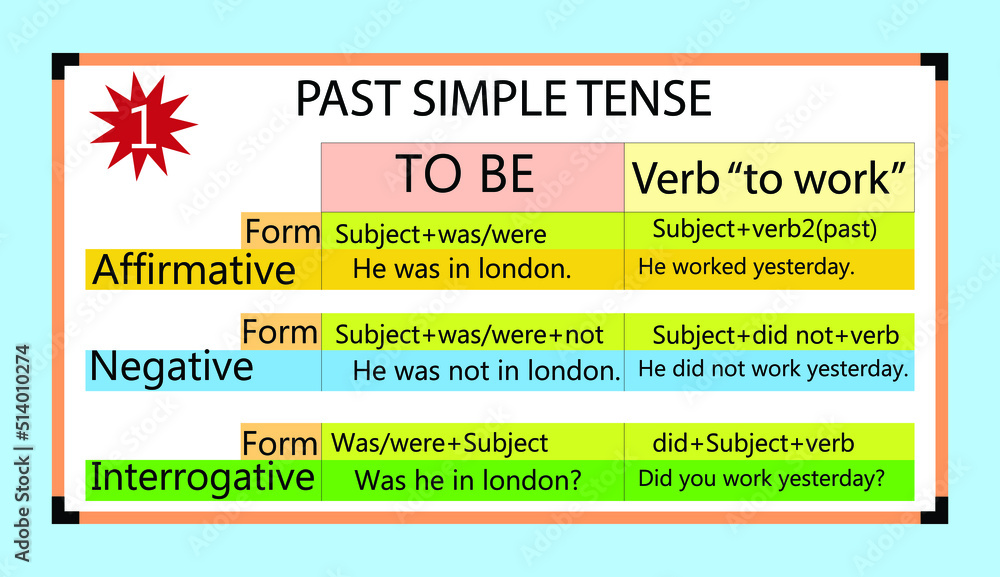
As for the tense, it's in the present simple here, showing that students are expected to do this now. But it can be used in the past too, if the expectation was in the past (e.g. Last year, students were to email their draft to the teacher, but there's a new system this year). I don't know if this meaning of to be has any specific name. The simple past tense (sometimes simply called past) of to be is formed irregularly and has two different forms (was/were). In addition, the verb ' to be ' can be utilised as a full verb as well as an auxiliary verb, in which case it forms part of the past continuous or the passive voice. O past simple (passado simples) do verbo to be apresenta duas formas - was, were -, que variam de acordo com o sujeito da oração/pronome pessoal (caso tenha dúvidas sobre pronomes pessoais, dá uma lida neste artigo aqui Pronomes Pessoais do Caso Reto). Quanto a sua tradução, pode equivaler ao pretérito perfeito ou ao